AIRBNB AI PLANNER · CONCEPT 2026
The future of AI-powered trip planning
© Airbnb AI Planner

ROLE
Product Designer
TIMELINE
6 Weeks
TEAM
Inkyung Ryu
SKILLS
Product Strategy
AI Prototyping
Cursor
Claude
PROBLEM
Modern travelers are paralyzed by choice
Travelers spend 10–15 hours researching stays, often stalled by Airbnb’s vast inventory and the paradox of choice. The challenge: turn fragmented search into an intelligent flow that anticipates needs instead of reacting to filters.
Conversational Search
Mapped how travelers describe trips naturally, then translated that language into structured search criteria.
Field Research
Observed real trip planning to pinpoint friction in tab-juggling, re-filtering, and mental math.
Cross-functional Collaboration
Partnered with engineering to validate AI interactions against real LLM latency and cost constraints.
Opportunity
An AI layer that plans, not just filters
Designed an AI orchestration layer that curates personalized itineraries in real time. Using Cursor and Claude, I built a high-fidelity prototype to test dynamic LLM interactions beyond static screens.
CORE FLOWS
From open-ended search to a guided plan
The experience moves travelers from a broad conversation to a complete itinerary, surfacing listings, dates, and logistics as the AI narrows the fit.
One Prompt to Start
Travelers describe their trip naturally, and the assistant starts planning: no forms or filters.
A Plan, Not Just Listings
A day-by-day itinerary assembles flights, stays, and activities instead of leaving travelers to sort listings.
Book Directly in Chat
Reserve flights, stays, and activities in one conversation, with a clear review before confirmation.
RESEARCH
Understanding the paradox of choice
Research showed travelers jumping between tabs, saving listings, and repeatedly re-filtering. That fragmented pattern shaped the project.

Start with one open-ended prompt
One free-form prompt starts the plan immediately: no filters or forms.
The assistant proposes a complete itinerary
The assistant surfaces flights, stays, pricing, and a day-by-day itinerary while keeping swaps conversational.
See the full day-by-day plan and book
Timed stops, stays, and activities roll into one price and a single Reserve step.
research & Iteration
Testing Real Prompts, Not Just Mockups
I tested four prompt patterns with travelers to find the one that reduced hesitation and reached a useful itinerary fastest.


Strategic directions
Three Bets on How AI Guidance Should Work
The directions that shaped the final planning experience.
We explored auto-booking at high confidence, but testing showed travelers didn’t want irreversible AI purchases. We kept an explicit confirmation step, prioritizing control over convenience.


Show the Reasoning, Not Just the Result
Explain flight and stay choices, budget fit, dates, and preferences inline so travelers can trust the plan.
One Conversation, Not a Form in Disguise
Keep trip changes in one thread so refining never feels like starting over.
A Human Checkpoint Before Anything Real Happens
Every booking requires review and confirmation, keeping the traveler in control.
Design decisions
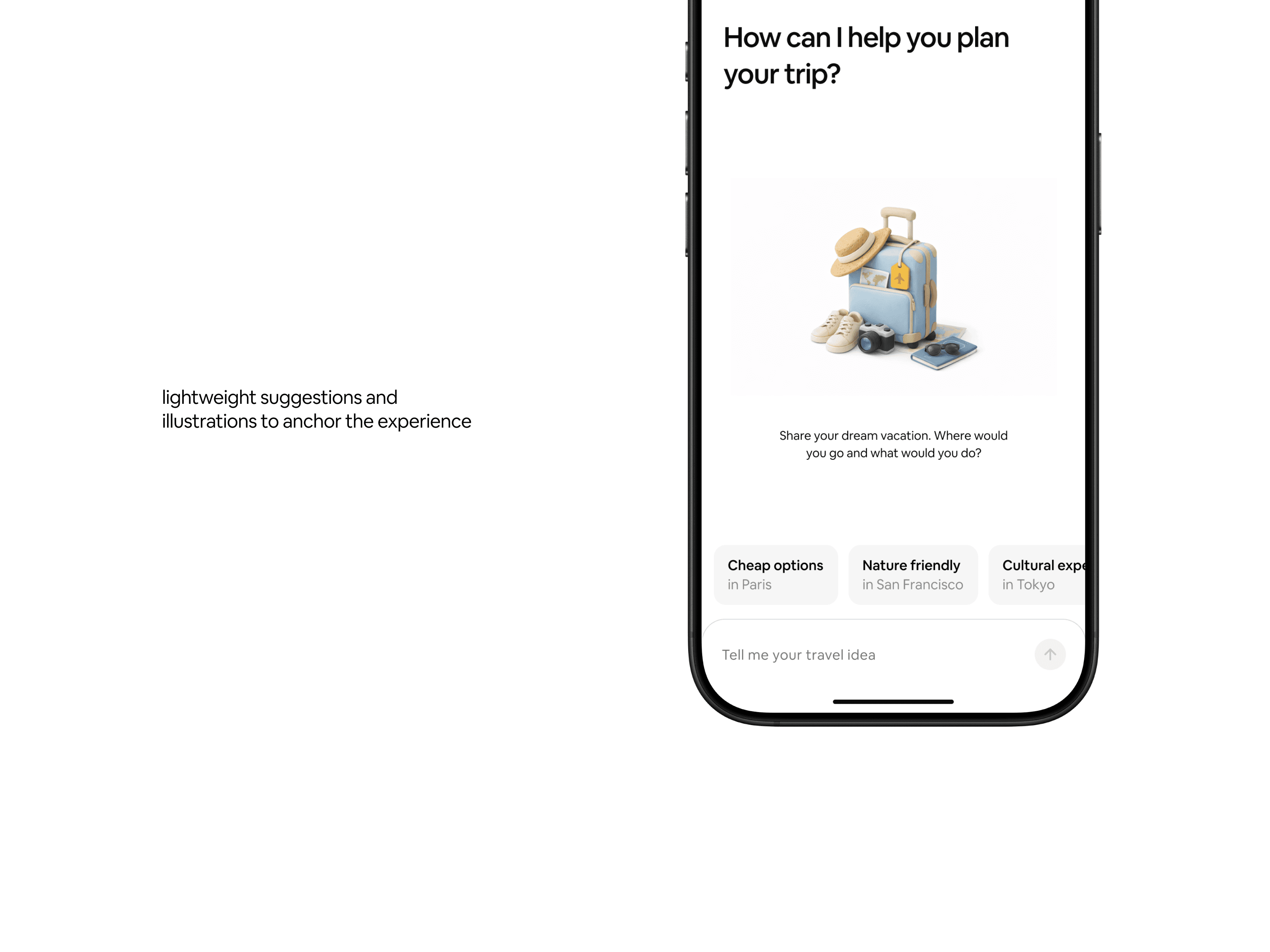
We prioritized a simple, familiar, and clean interface.
The interface uses familiar chat and card patterns so AI trip planning feels approachable rather than unfamiliar.
reflections
Key Takeaways
Prompts Are a Design Material
The first response’s wording shaped trust as much as the layout.
You Can't Spec an AI Conversation
A working Cursor-and-Claude prototype exposed edge cases static mocks couldn’t reveal.
Trust Is Built by Staying Visible
Travelers trusted a slower assistant that explained itself more than a faster one that didn’t.
U-Haul Truck Reservation
U-Haul Homepage